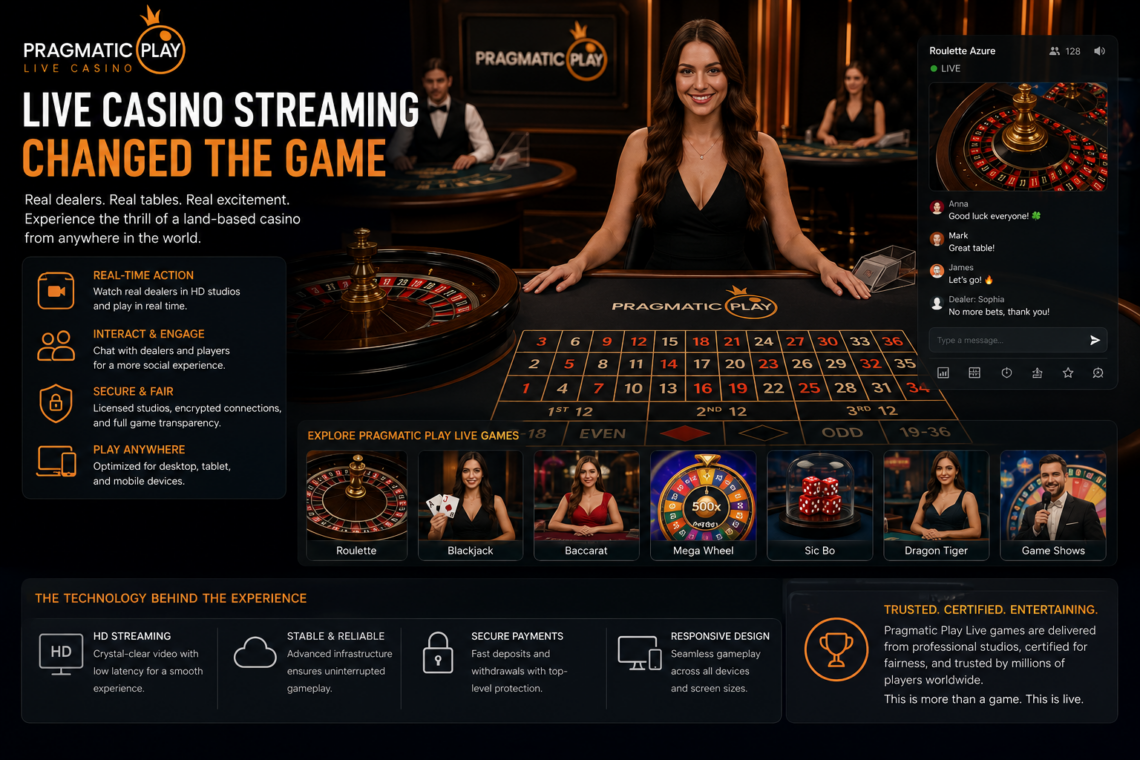
Players interested in exploring pragmatic play live titles can browse a dedicated collection of live dealer games available through Voodoo Casino. Provider-specific sections make it easier to discover tables, compare formats, and understand how different live gaming studios present their products within a modern online platform.
From Random Numbers to Real-Time Interaction
Classic online casino games rely on certified Random Number Generators, a technology that has been independently tested and trusted for many years. Live casino games introduce a different kind of experience. Cameras, streaming infrastructure, and trained dealers combine to recreate much of the atmosphere associated with physical gaming venues while preserving the convenience of remote access.
For many players, this is less about replacing software-based games and more about expanding the available choices. Some sessions call for the fast pace of digital slots, while others encourage a slower, more social experience built around real-time interaction.
The result is an ecosystem where different forms of entertainment comfortably exist alongside one another instead of competing for the same audience.
The Studio Behind the Screen
A live casino broadcast resembles a television production far more than a conventional browser game. Multiple cameras capture different viewing angles, lighting specialists create a consistent visual environment, and production teams monitor every stream to ensure uninterrupted delivery. Audio engineers, technical operators, and support staff all contribute to an experience that appears effortless from the player’s perspective.
Modern studios are designed specifically for online broadcasting rather than public visitors. Every table is positioned to maximise visibility, while high-resolution cameras capture details that would be impossible to appreciate in many traditional casino environments. This careful production creates a polished presentation that feels equally comfortable on desktop monitors and smartphone displays.
The most successful live casino platforms do not simply stream a table. They produce an interactive digital broadcast where technology quietly supports every moment without distracting from the experience itself.
Why Streaming Quality Matters
Video quality influences much more than appearance. A stable stream allows players to follow every stage of the game naturally, while low latency reduces delays between dealer actions and player decisions. Improvements in broadband infrastructure, adaptive video compression, and cloud distribution have made these broadcasts significantly more reliable than early live casino experiments from years ago.
Responsive streaming technology automatically adjusts video quality to different internet connections. Someone using fibre broadband may receive ultra-high-definition video, while another player on a mobile network continues watching a smoother stream optimised for available bandwidth. This flexibility allows live gaming to remain accessible across a wide variety of devices and network conditions.
Interface Design Plays an Invisible Role
Live dealer games contain considerably more information than many traditional casino products. Alongside the video feed, players often need access to betting controls, game history, account information, chat features, and settings. Presenting all of these elements without overwhelming the screen requires thoughtful interface design.
Successful layouts allow attention to remain on the dealer while essential controls stay within easy reach. Buttons are positioned for comfortable touch interaction, information panels can be expanded or collapsed when needed, and the overall interface remains readable regardless of screen size. These seemingly minor decisions have become an essential part of the user experience.
The best interfaces rarely attract attention because they remove unnecessary friction instead of adding visual complexity.
A Growing Place Within Online Entertainment
The popularity of live casino content reflects a broader shift in digital entertainment. People increasingly value experiences that combine convenience with authenticity. Streaming concerts, interactive broadcasts, and live sporting events have changed audience expectations across the internet, and casino platforms have evolved in a similar direction by integrating professionally produced live gaming into their overall libraries.
Rather than replacing classic online games, live dealer products broaden the range of available experiences. Players can move between software-driven titles and real-time broadcasts without leaving the same platform, choosing whichever format best matches their preferences at a particular moment.
Looking Toward the Next Generation
Live casino technology continues advancing through improvements in streaming efficiency, studio production, browser performance, and mobile optimisation. As internet infrastructure becomes faster and production techniques continue evolving, the distinction between digital platforms and traditional gaming environments is likely to become even less noticeable.
For operators, software providers, and players alike, this ongoing development represents more than technological progress. It demonstrates how online entertainment constantly adapts to changing expectations while preserving accessibility across devices and locations. Whether someone prefers automated casino games or professionally hosted live tables, the future of online gaming appears increasingly focused on offering greater variety, stronger performance, and richer interactive experiences.